Reactor
High performance virtual synthesis engine
Technical presentation
Product related articles in the Library
- acid azide synthesis
- acyl isocyanate from amides with oxalyl chloride
- Acylation of amine
- Addition of alcohols to alkynes
- Addition of hydrogen cyanide to alkynes
- alcohol oxidation with Corey-Kim reagent
- alcohol protection with Grieco reagent
- Aldol reaction
- alkanes and cycloalkanes
- Alkyl Lithium formation from alkyl halides
- Alkylation of amines with alkyl halides
- Alkylation of phenols with benzyl chloride
- Allylic halogenation of alkenes
- alpha-Bromination of oxocompounds
- alpha-Hydroxynitrile formation
- alpha-Iodination of oxocompounds
- Angeli-Rimini hydroxamic acid synth
- Arylation of amines
- Baeyer-Villiger carbonyl oxidation
- Barton deamination
- Baylis-Hillman vinyl alkylation
- Beckmann rearrangement
- Benary reaction
- Benzidine rearrangement
- Beta HX elimination (Zaitsev elimination)
- Biginelli pyrimidone synthesis
- Birch reduction
- Bischler-Mohlau indole synthesis
- Bischler-Napieralski isoquinoline synthesis
- Blanc chloromethylation
- Blum aziridine synthesis with azide
- Borch reductive amination
- Borsche-Beech aromatic carbonyl synthesis
- Bouveault-Locquin amino acid synthesis
- Bredereck imidazole synthesis from acil methyl acilates
- Bredereck imidazole synthesis from alpha substituted ketones
- Bromination of aliphatic nitro compounds
- Bruylants amination
- Bruylants amination intramolecular
- Bucherer-LePetit naphtol synthesis
- Bucherer-LePetit naphtylamine synthesis
- Buchwald-Hartwig cross coupling
- Burgess dehidration reagent
- Burton trifluoromethylation
- Carboxylic acid addition to alkynes (anti-Markovnikov)
- Carboxylic acid addition to alkynes (Markovnikov)
- carboxylic acid chloride synthesis
- Catalytic hydration of alkenes
- Catalytic hydrogenation of aromatic compounds with Rh_C or Pt_C
- Catalytic hydrogenation of aromatic hydrocarbons with H2/Ni or H2/Pd-C
- Catalytic hydrogenation of phenols
- Chan reduction of acetylenes
- Chan-Lam coupling
- Chapman rearrangement
- Chichibabin amination
- Clay-Kinnear-Perren phosphoryl chloride synthesis
- Cleavage of acyclic ethers with HI (SN1 mechanism)
- Cleavage of epoxides
- Cleavage of ethers with HI (SN2 mechanism)
- Cleavage of vinyl ethers
- Clemensen reduction
- Collman carbonylation reagent in aldehyde synhesis
- Condensation reaction of primary amines and oxocompounds
- Condensation reaction of secondary amines and oxocompounds
- Cope elimination
- Corey-Chaykovsky reaction
- Corey-Winter olefin synthesis
- Criege glycol cleavage
- Curtius rearrangement
- Dakin oxidation
- Darapsky degradation
- Darzens epoxide synthesis
- Dehalogenation of vicinal dihalides
- Dehydration of alcohols to alkenes
- Delepine aldehyde oxidation
- Delepine amine synthesis
- Dess-Martin alcohol oxidizing reagent
- diazoalkane acylation
- diazotation of aromatic amines
- Diazotisation of primary anilines
- Diels-Alder cycloaddition
- Diels-Alder reaction with fused aromatic hydrocarbons
- Direct alkylation of amines with epoxide
- Doering-LaFlamme allene synthesis
- Dondoni homologation
- Einhorn-Brunner triazole synthesis
- enamine formation with modified Mannich reaction
- Erlenmeyer amino acid synthesis
- Eschenmoser fragmentation
- Eschenmoser methylenation
- Eschweiler-Clarke amine methylation
- Ether formation from alcohols
- Feist-Benary furane synthesis
- Finnegan tetrazole synthesis
- Fischer indole synthesis
- Fischer oxazole synthesis from cyanohydrins
- Fischer oxazole synthesis from hydroxyamides
- Formation of acetals and ketals
- Formation of alkylated, alpha unsaturated nitro compound
- Formation of cyclic acetals and ketals
- Forster diazo synthesis
- Freund-Gustavson cyclopropane synthesis
- Friedel-Crafts acylation
- Friedel-Crafts alkylation
- Friedlander quinoline synthesis
- Fritsch-Buttenberg-Wiechell acetylene synthesis (rearrangement)
- Fukuyama coupling
- Gabriel amine synthesis
- Gewald aminofurane synthesis
- Gewald aminopyrrole synthesis
- Gewald aminothiophene synthesis
- Goldberg coupling
- Grignard addition to carbonyl compounds
- Grignard compound addition to carbonyl compounds
- Grignard reaction to carbonyl compounds
- Grignard reagent formation
- Guaresky-Thorpe pyridone synthesis
- Guy-Lemaire-Guette ortho chlorination
- Guy-Lemaire-Guette para chlorination
- Halogen addition to alkenes
- Halogen addition to alkynes
- Halogenation of alcohols with hydrogen halides
- Halogenation of alkanes (substitution)
- Halogenation of alkanes (UV light)
- Halogenation of aromatic hydrocarbons
- Halogenation of primary anilines
- Hass-Bender carbonyl synthesis
- Heck reaction
- Heck reaction (intermolecular)
- Heck reaction (intramolecular)
- Hell-Volhardt-Zelinski bromination
- Henry nitro condensation
- Herz benzothiazole synthesis
- Hiyama coupling
- Hofmann amide degradation
- Hofmann elimination
- Hofmann-Löffler-Freytag reaction
- Horner-Wadsworth-Emmons olefination
- Horner-Wadsworth-Emmons reaction
- Houben-Hoesch phenol acylation
- Houben-Hoesch phenol formylation
- Hunsdiecker-Borodin-Cristol-Firth decarboxylation bromination
- Hydration of alkenes
- Hydration of alkynes (Markovnikov’s addition)
- Hydration of terminal alkynes (anti-Markovnikov’s addition)
- Hydrogen bromide addition to alkenes (anti-Markovnikov)
- Hydrogen halide addition to alkenes (Markovnikov)
- Hydrogen halide addition to alkynes
- Hydrolytic carbon monoxide addition to alkynes
- Hydroxyation of alkenes with potassium permanganate
- Hydroxymethylation of phenols
- imino ester synthesis
- Intramolecular amine alkylation
- isocyanate synthesis from amines with phosgene
- isocyanate with nucleophile
- Isomerisation of alkenes
- Isonitril formation
- Isothiocyanate formation from primary aromatic or aliphatic amines
- Jones oxidation of primer alcohols
- Jones oxidation of secunder alcohols
- Keinan silane reagent for reductive iodination
- Kendall-Mattox dehydrohalogenation
- Knoevenagel condensation
- Knoevenagel condensation Doebner modification
- Knorr quinoline synthesis
- Kolbe-Schmitt synthesis
- Kornblum aldehyde synthesis
- Kuhn-Winterstein olefination
- Kumada coupling
- Kumada-Negishi coupling
- Lawesson thiacarbonylation
- Leuckart-Wallach reductive amination
- Lieben hypohalide oxidation haloform reaction
- Madelung indole synthesis
- Mannich reaction
- McFadyen-Stevens reduction
- Meerwein-Ponndorf-Verley reduction
- Menshutkin reaction
- Methylation of phenols with diazomethane
- Milas olefin hydroxylation
- Miller-Loudon-Snyder nitrile synthesis
- Miyaura borylation reaction
- Negishi coupling
- Nitration of alcohols with nitric acid
- Nitration of alkanes
- Nitration of aromatic amines
- Nitration of aromatic hydrocarbons
- Nitrosation of secondary amines
- Noyori asymmetric hydrogenation of carbonyls
- nucleophile acylation with acid halide
- Nucleophile acylation with carboxylic acid or anhydride
- Nucleophilic aromatic substitution (SN2)
- O’Donnell amino acid synthesis
- Oppenauer oxidation
- Oxidation of alcohols
- Oxidation of alkanes to alcohols
- Oxidation of alkanes to ketones
- Oxidation of alkenes with peracids
- Oxidation of alkenes with potassium permanganate
- Oxidation of alkynes with potassium permanganate(basic medium)
- Oxidation of alkynes with potassium permanganate(neutral medium)
- Oxidation of alpha methyl aromatic hydrocarbons with KMnO4 to benzoic acid
- Oxidation of anilines to ortho quinones
- Oxidation of anilines to para quinones
- Oxidation of phenols to ortho or para quinones
- Oxidation of tertiary amine to amine oxide
- Oxidation of vicinal diols to aldehydes or ketones
- Oxime from active CH with nitrosation
- Oxime from carbonyls with hydroxylamine
- Ozonolysis of alkenes
- Paal-Knorr furane synthesis
- Paal-Knorr pyrrole synthesis
- Paal-Knorr thiophene synthesis
- Passerini condensation
- Perkin reaction
- Perkin rearrangement
- Petasis reaction
- Pfitzinger quinoline synthesis
- Phenol formation from primary anilines
- Quellet chloroalkylation
- Reaction of alkynes with oxo compounds (Reppe like reaction)
- Reaction of amines with alcohols
- Reaction of primary aliphatic amines with nitrous acid
- Reduction of alkyl halides (Zn/H+,LiAlH4,Pd/C,HI)
- Reduction of nitro arenes to azo arenes
- Reduction of nitro compounds to amines or anilines
- Reformatsky reaction
- Reformatsky reaction intramolecular
- Reformatsky reaction of thiocarbonyls
- Ring closure by halogen elimination from alkyl halides
- Ritter reaction intramolecular
- Ritter reaction of alcohols
- Ritter reaction of alkenes
- Schotten-Baumann reaction with phenols
- SN1 substitution of alkyl halides
- SN2 substitution of alkyl halides
- Stille carbonyl synthesis
- Stille coupling
- Sulfation of alcohols with sulfuric acid
- Sulfonation of aromatic amines
- Sulfonation of aromatic hydrocarbons
- Suzuki coupling
- Symmetric coupling of 1-alkynes
- Symmetric coupling of di-alkynes
- THP group cleavage
- Tosylation with Koser’s reagent
- Ullmann condensation
- Ullmann reaction
- Voight α-aminoketone synthesis
- Volhardt-Erdmann thiophene synthesis
- von Braun degradation of tertiary amines
- Wacker-Tsuji olefine oxidation
- Water addition to carbonyl compounds
- Williamson ether synthesis
- Wittig reaction
- Wolff rearrangement
- Wolff-Kishner reduction
- Wurtz reaction
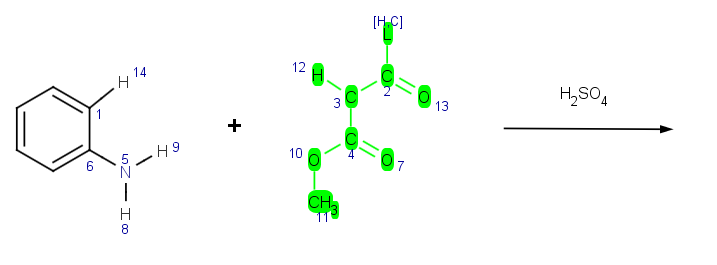
The virtual enumeration of chemical reactions is a powerful tool in virtual compound library design or combinatorial chemistry. Reactor is the virtual reaction enumeration engine of ChemAxon’s JChem technology that supports generic reaction equations combined with reaction rules and hence is capable of generating chemically feasible products without pre-selection of reagents. Reactor is able to carry out highly automated reaction enumeration as well as the manual selection of main products for a given chemical reaction is supported.
Predicting products of chemical reactions
Reaction synthesis on your desktop
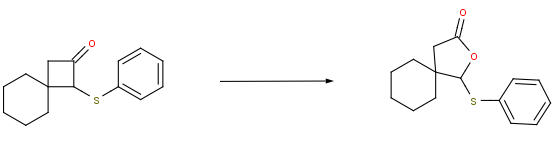
Reactor is a high performance, integratable reaction enumeration engine. It works with generic reaction equations that can be defined and imported in various formats, including among others SMIRKS/SMARTS strings, RDF, RXN and MRV files or be drawn in MarvinSketch.
The Reactor package includes a large and constantly increasing library of organic chemical reactions that can be used directly, without any further configuration.
Define your chemical reactions
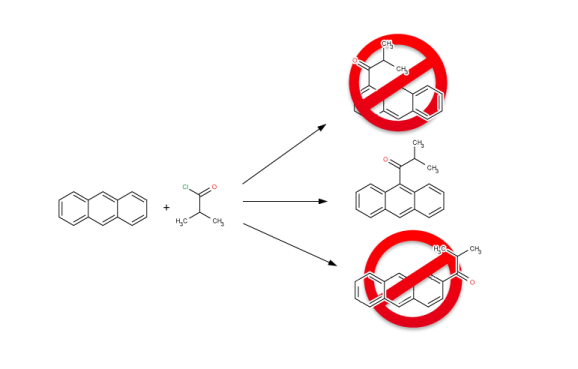
Using the generic reaction equations virtual synthetic compound libraries can be generated under full manual control. When doing so, users have the opportunity to draw and edit reactants directly and to select chemically meaningful products from the output of the enumeration process by using their chemical intuition on the fly. This approach is particularly advantageous for enumerating small, focused libraries.
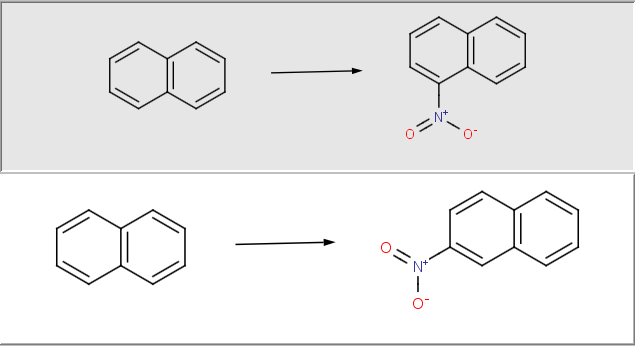
Get synthesizable molecules by proper reaction rules
The reaction rules are defined in Chemical Terms, ChemAxon’s scripting language that is designed to add chemical intelligence to cheminformatics applications. Through Chemical Terms a large number of calculated properties can be included in the reaction rules to produce valid compound libraries. Besides calculating physicochemical properties on the fly, Chemical Terms language also supports importing of arbitrary fields from the input reactant files to be used for the evaluation of the reaction rules.
Intelligent and flexible reaction enumeration
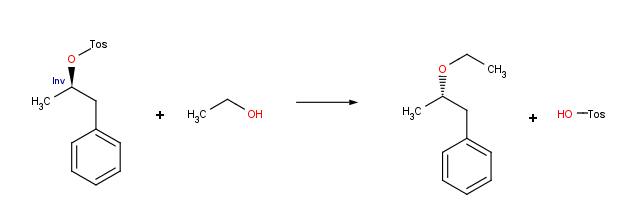
Stereochemically aware reactions
Reaction schemes can include stereochemical information. Reactor is capable of handling both tetrahedral and double bond stereochemistry flexibly; inversion and retention centers as well as cis-trans configuration changes can be determined within Reactor’s smart reaction schemes. Prochiral reaction schemes are also supported since version 5.5, allowing the user to manage syn/anti additions.
Library design
Reactor can be set up to carry out simple sequential enumeration, in which case reactants are virtually reacted with each other in the order as they are present in the input files. Reactor is also capable of combinatorial enumeration, generating combinatorial virtual synthetic libraries. Users also have the option to exclude unwanted products from the enumeration results manually, restricting the outcome of the reaction enumeration process to the desired main products only. Reactor supports the generation of product or reaction libraries in a large variety of different output formats.
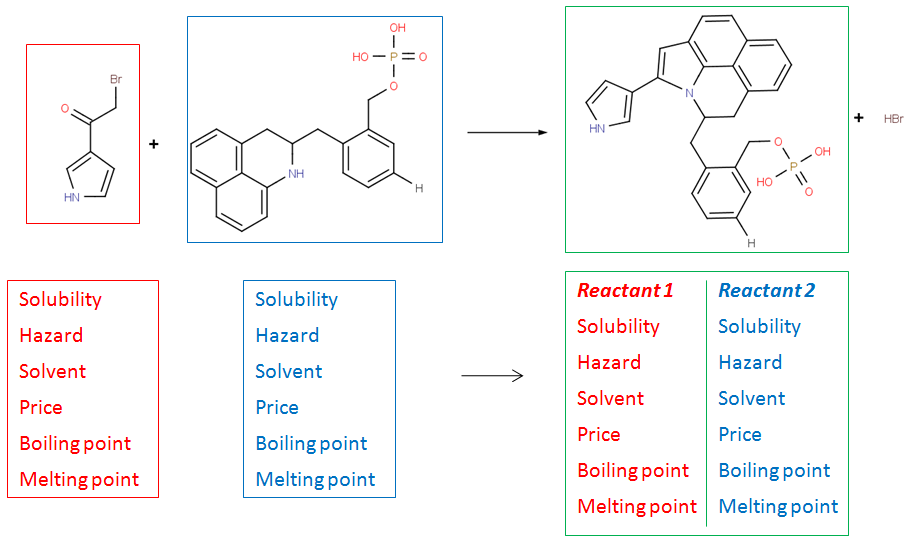
Create rich molecular libraries
Reactor has the option to copy arbitrary property fields from the input reactant files to the results. These can include e.g. solubility or availability information of the reactants. Also, Reactor can generate synthesis codes for each reaction in the enumeration process containing selected information from the reaction scheme and the reactants.
Ease of access
A wizard-like user interface
The standalone version of Reactor has a clean and straightforward graphical user interface for configuring the reaction enumeration process. The GUI leads users step by step through the whole configuration process of the virtual chemical reaction.
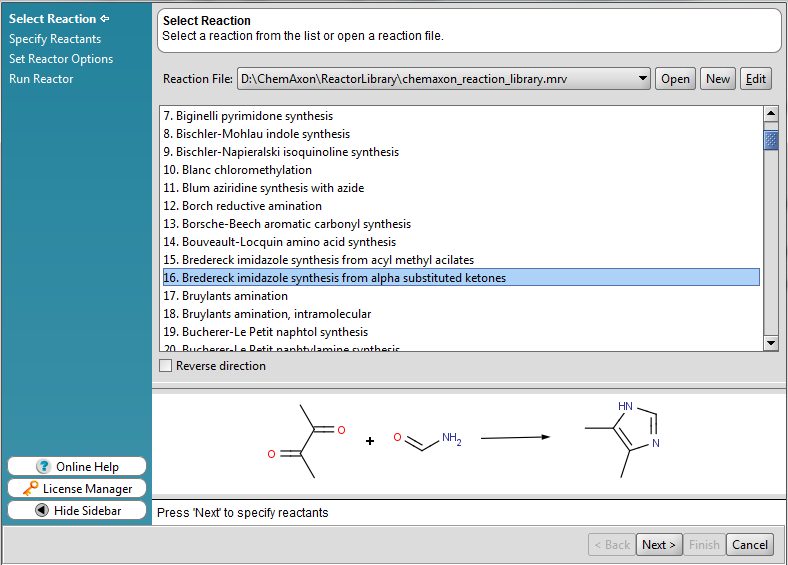
Accessibility on various platforms
Reactor is available as a standalone application and has also been integrated into Instant JChem and JChem for Excel. It is also available in the workflow management tools KNIME and Pipeline Pilot. In its standalone version it can be used through the GUI, as a command line application and also through a full featured Java API. Reactor offers full platform independence, it is equally available for Microsoft Windows®, Mac OS and Linux platforms.
Create and test your reactions
Reactor has an integrated reaction sketcher and editor tool. Users can create their own reaction schemes and add corresponding reaction rules to them using the Chemical Terms language. The prepared reaction schemes can be tested and the reaction rules can be validated using the integrated reaction testing tool of Reactor.
Articles in the library
Reaction scheme: Capture, Iterator, and Parser Presentation
Reactor – switching on the manual gear Presentation
Virtual reaction design for chemists Presentation
Need more information?
Have a look on our support forum or drop us a line.